The Power of Words: Life and Death in the Tongue

Hey there BCU Family!

For this rebroadcast, you have the option of listening to our podcast (click here or on the BCU avatar below to listen), reading the notes or BOTH. In any case, we pray the podcast blesses you. If so, please thumbs up or leave a comment! Thank you and enjoy your study! 

**********************************************************************************************************************

I was talking to a friend of mine recently about the power of words.  We often do not give much thought to the words we say and how they effect and infect those we come in contact with, nor do we consider what God has to say about our speech. Let’s take a look at a few verses that we should use as a filter for what we say.

***********************************************************************************************************************

1. Our words are life and death. What we speak, we eat.  

Death and life [are] in the power of the tongue: and they that love it shall eat the fruit thereof. (Proverbs 18:21).

2. When we talk too much, we usually end up saying the wrong things and eventually sin. 

In the multitude of words there wanteth not sin: but he that refraineth his lips [is] wise. (Proverbs 10:19).

3. “Idle words” means words with no profit–they mean nothing at all. Our words should always add value to a conversation and the company we are in. Jesus reminds us about what happens when we are speak empty words.

But I say unto you, That every idle word that men shall speak, they shall give account thereof in the day of judgment. For by thy words thou shalt be justified, and by thy words thou shalt be condemned (Matthew 12:36-37).

4. Our words can either hurt or heal. 

“There is that speaketh like the piercings of a sword: but the tongue of the wise is health.” (Proverbs 12:18).

5. Our words should be like a beautiful picture.

 “A word fitly spoken is like apples of gold in pictures of silver” (Proverbs 25:11).

6. Our words should instruct or improve someone. 

“Let no corrupt communication proceed out of your mouth, but that which is good to the use of edifying, that it may minister grace unto the hearers” (Ephesians 4:29).

7. Before we speak–and get/respond in an  extremely angry state, we should listen prayerfully first. 

“Wherefore, my beloved brethren, let every man be swift to hear, slow to speak, slow to wrath: for the wrath of man worketh not the righteousness of God (James 1:19-20).

BCU Fam, I intended for this post to go one way, but the Lord took it in a totally different direction! When we consider the implications of our speech and how seriously God takes what we say, our resolve, with His help should be pray before we speak whether it’s a casual conversation, meeting, discussion, disagreement or even in correcting someone.  When we do pray before we say,  our conversations will be more meaningful, rich and bring glory to God. Amen? Amen.

PNG image-CDB4DFDE1269-1

This is a HEAVY topic, BCU Fam! What do you think about words and their weight? Are idle words a struggle? Maybe telling someone a thing or two because you just have to say it? Or maybe you have gotten the victory when it comes to conversation! Let’s talk more in the comments section!


As a reminder, if you have not subscribed to BlenCouragesU.com, please do so! It’s free and a good place to get the encouragement, inspiration and information based the Word of God! Additionally, you can also see what we are up to on Facebook, X, and Instagram.

Also, if you so inclined, join us Thursday nights––we are LIVE on YouTube 8:05EST/7:05CST. You can also listen in and subscribe to the podcast on Apple podcasts, Pandora, and Spotify!

Thank you SO much for stopping by! God bless, keep and make His face to shine upon you as you #StayOnTheWall!

Love,

BCU

Seasoned saints: The importance of salt in your life–Part 2

Hey family!

I trust God blessed you all with a wonderful Thanksgiving! Mine was fantastic, filling and went by fast! 🙀

Last post, I started on a “salt series” that talked about salt production and how vital it is to our natural body and in the body of Christ on a spiritual level. This time around, lets see what the Word is on salt.

“You are the salt of the earth; but if the salt loses its flavor, how shall it be seasoned? It is then good for nothing but to be thrown out and trampled underfoot by men (Matthew 5:13).

20121129-101151.jpg

One of the earliest mentions of salt is in Leviticus 2. That chapter outlines detailed instructions on how sacrifices had to be prepared to be given to the priests and then offered to God. In verses 4-6, you’ll see God was very specific about the flour, oil—and even if the grain sacrifice was made pan versus a frying pan. (Side note: note how you just couldn’t bring God a sacrifice any ol’ way. That’s important for us to think about when we bring Him our sacrifice of praise, worship, time, money..anything we have for Him). Looking at the verses 11-12, God specifies the “seasonings” on the offering–that there should be no leaven or honey, but:

Every offering you shall season with salt. You shall not allow the salt of the covenant of your God to be lacking from your grain offering. With all your offerings you shall offer salt” (Leviticus 2:13).

Okay, Blen, so what does that mean? I am glad you asked! Salt was just not a food enhancer or monetary trade items like we learned last time, it was also used as a covenant symbol.

History mentions that people used salt as a sign of binding loyalty and a symbol of alliance. In fact, in Europe and parts of the Middle East, salt and bread are offered to guests as a sign of friendship (hence the phrase “we have salt between us”). Additionally, treaties and truces were formalized using salt. Each person would take a lick of salt (similar to shaking hands) to “seal the deal”.

Salt was also used to heal a rift between parties as well. If there was a disagreement between folks, you would invite the person into your home to share a dish of salt. Each of you would lick your finger, dip it in the salt and then eat the salt together. Peculiar as this may sound, when a promise was seasoned with salt, it was so serious, that people would rather die than break that promise! Let’s examine another Scripture on the Covenant of salt.

2 Chronicles 13 tells of a war between Israel (King Jeroboam) and Judah (King Abijah). Jeroboam had the bigger army and was pretty sure he could take Abijah down. King Abijah reminded Jeriboam of God’s promise.

“Should you not know that the Lord God of Israel gave the dominion over Israel to David forever, to him and his sons, by a covenant of salt? Now look, God Himself is with us as our head, and His priests with sounding trumpets to sound the alarm against you. O children of Israel, do not fight against the Lord God of your fathers, for you shall not prosper!” Then the men of Judah gave a shout; and as the men of Judah shouted, it happened that God struck Jeroboam and all Israel before Abijah and Judah”
(2 Chronicles 13:5,12,15 NKJV). Yessss–God ALWAYS keeps His word and Judah triumphed!!!!!!

Are you connecting the dots, Family? Isn’t it wonderful to see how God shows us how He keeps promises with something as simple, yet as powerful as salt? How about the promises we make? 🙊Are they “salt-worthy”? Solomon warns us think before we vow:

Do not be rash with your mouth, and let not your heart utter anything hastily before God. For God is in heaven, and you on earth; Therefore let your words be few
(Ecclesiastes 5:2 NKJV).

I cannot speak for you all, but if someone promises they will do something and they don’t follow through, I am so disappointed! Because the Lord has made me more mindful about keeping my word, He reminds me to say “with God’s help I will”…or, “if nothing changes, I plan to”, or “Lord will, I’ll…” Keeping that last verse in mind, it really helps us to rely on our perfect God to help us keep our word. Also, if we something does happen, it’s a good idea to circle back to the person quickly and fulfill your promise as soon as possible.

Bottom line: If you can’t season your promise with salt, it really best not to promise at all. I heard a cartoon character say, a broken promise cannot be easily put back together. How true.

I’ll leave you to meditate on this post, as we prepare for the next salt installment, that will talk more about why we need (more) salt in our natural and spiritual lives.

I pray you all were blessed by what you have read! Thanks and God bless you for stopping by!

Love,

Blen

Seasoned saints–The importance of salt in your life

You are the salt of the earth; but if the salt loses its flavor, how shall it be seasoned? It is then good for nothing but to be thrown out and trampled underfoot by men” (Matthew 5:13).


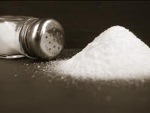
20121114-214623.jpg

Hey family,

The Lord blessed me teach on salt at church and I thought I’d share (in a condensed version) what He gave me with all of you in a blog series. In Matthew 5:13, Jesus compared His disciples to salt. Why salt? Let’s start by taking a look at salt history of salt and why we need it in our natural bodies and in The Body of Christ.

Salt comes from the ocean, and the salt water is usually channeled into smaller, shallow pools of water. The wind and sun evaporate the water and as the salt crystallizes, it is, in some cases, hand-harvested by sauniers. This labor-intensive process can sometimes take up to five years to complete!

Salt comes from the Latin world salarium, which means payment in salt and where our word “salary” comes from. History tells us salt was a precious, expensive, highly valued item of trade and sometime used for monetary exchange. In fact, some sources say Roman soldiers were even paid in salt! When salt was your payment, you were living LARGE! 😃 Now that you have some background, let’s take a look at why we need salt.

Salt gets a bad rap in part, because our diets have changed to include more processed, fatty and preserved food that has lots of table salt. Table salt isn’t bad-bad, just not as good as natural sea salt is. Pure sea salt has minerals like sulphate, magnesium, calcium, potassium, bicarbonate, bromide, borate, strontium, and fluoride–the body needs these to function. While table salt originally comes from sea salt, in its processing, those minerals are stripped away and iodine added in. (Side note–I suggest getting the sea salt and eat more fish and veggies for iodine). 😉

Pure salt is needed in your body because it:

Prevents muscle cramps
Provides essential nutrients
Enhances nutrient absorption

Regulates
–Blood pressure (in conjunction with water)
–Blood sugar
–Sleep

So salt regulates your body, helps you function and keeps a lot of the “bad” out. This is just a fraction of what this needed nutrient does. Now look at the spiritual need for salt.

Salt regulates the body of Christ by keeping the bad out:

Now the works of the flesh are evident, which are: adultery, fornication, uncleanness, lewdness, idolatry, sorcery, hatred, contentions, jealousies, outbursts of wrath, selfish ambitions, dissensions, heresies, envy, murders, drunkenness, revelries, and the like, which I tell you beforehand, just as I also told you in time past, that those who practice such things will not inherit the kingdom of God (Galatians 5:19-21).

It also keeps us functioning by keeping the good in like peace, love, joy, peace, long suffering, gentleness, goodness, temperance, faith and meekness (Galatians 5:22). With the salt Jesus gives you on the inside, it shows up on the outside!

As a needed spiritual nutrient, Jesus commanded that we “have salt in yourselves and peace with one another” (Mark 9:50). In our next installment, we’ll take a look at what that means and why salt is vital in friendships and covenants. Stay tuned!

Thanks for reading and be blessed!

Blen

http://www.himalayancrystalsalt.com/salt-history.html